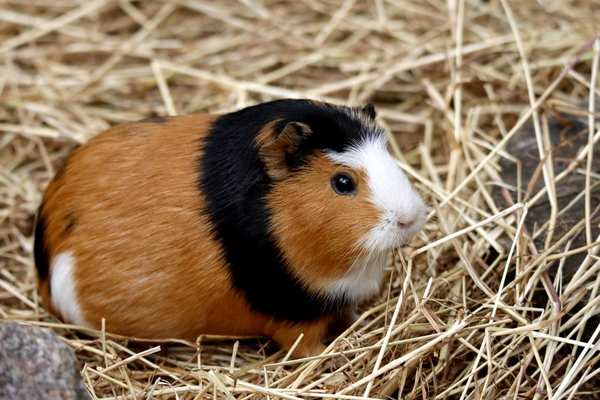
Choosing hay for a guinea pig sounds simple until you see bags labelled Timothy, orchard, meadow, oat, and alfalfa. The useful question is not which name is “best,” but whether the hay is suitable for everyday feeding, fresh, and appealing enough that your guinea pig eats plenty of it. For most healthy adults, unlimited grass hay should be available at all times because fibre supports normal gut function and chewing helps wear continuously growing teeth.
Timothy Hay: The Familiar Everyday Choice
Timothy hay is the standard recommendation many owners meet first. It is a grass hay that provides the long, fibrous material guinea pigs need for regular grazing and chewing. A good bag may contain leaves, stems, and seed heads, with texture changing from one crop or cutting to another.
For a healthy adult, Timothy hay works well as the main everyday hay. The main drawback is practical: some guinea pigs dislike especially coarse batches and pick out the softer pieces while leaving tougher stems behind.
Best for
Timothy is a strong default for most adult guinea pigs, especially when they eat it enthusiastically and the hay is dry, fresh-smelling, and free from mould or excessive dust.
Orchard Grass Hay: A Softer Everyday Alternative
Orchard grass hay is also an appropriate staple grass hay for adult guinea pigs. Veterinary guidance commonly lists orchard grass alongside Timothy. It is often softer and leafier, which can make it attractive to pigs that ignore coarse Timothy.
If your guinea pig eats noticeably more orchard grass hay, that matters. Hay only helps when it is consumed. A softer hay that disappears steadily can be more useful than a “standard” hay that sits untouched in the guinea pig hay feeder.
Best for
Orchard grass suits picky hay eaters, owners who want to rotate grass hays, and guinea pigs that simply prefer a softer texture. For healthy adults, it does not need to be treated as a lesser substitute for Timothy.
Meadow Hay: More Natural Variety
Meadow hay is usually a mixture of grasses and may contain different plant species depending on where and when it was harvested. That variety can encourage natural foraging, and reputable welfare guidance recognises meadow hay as an everyday option.
The trade-off is consistency. One bag may be leafy and fragrant, while another is coarser. Check the actual hay each time you buy it and avoid anything damp, mouldy, heavily dusty, or unpleasant-smelling.
Best for
Meadow hay works well for owners who want variety and for guinea pigs that enjoy rummaging through different textures. It can also be mixed with Timothy or orchard hay.
Alfalfa Hay: Useful for Specific Life Stages
Alfalfa hay is different because alfalfa is a legume rather than a grass. It is richer in calcium and protein, so it is generally not recommended as the routine unlimited hay for a healthy adult guinea pig. Veterinary sources commonly reserve it for young, growing guinea pigs and pregnant or nursing females, whose needs are different.
That explains why “alfalfa hay guinea pig” advice can seem contradictory. Alfalfa is not poisonous; it is simply richer than most adults need. If your guinea pig is growing, pregnant, nursing, underweight, or has a medical condition, ask an exotics vet which hay balance is appropriate.
What About Oat Hay and Other Grass Hays?
Oat hay can add variety, and other grass hays such as rye or brome may also be suitable. Some veterinary feeding guides suggest keeping oaten hay as an occasional option rather than the sole everyday hay because it can be more calorie-dense, especially when it contains many seed heads.
The safest general approach is to keep an appropriate grass hay as the foundation and use variety to encourage steady grazing.
How to Choose Between Hay Types in Real Life
Consider two adult guinea pigs given the same coarse Timothy hay. One eats constantly, while the other sorts through it and leaves most of the stems. Instead of repeatedly buying the same bag because Timothy is the familiar choice, mix in orchard grass over several days and watch what happens. If the reluctant eater begins grazing more consistently and droppings remain normal, orchard may be the better everyday fit.
Avoid sudden diet changes. Introduce a new hay gradually by mixing it with the old one. If appetite drops, droppings decrease, or a guinea pig stops eating, contact a vet promptly because reduced food intake can become serious quickly.
Hay Quality Matters as Much as Hay Type
Even the right variety can be a poor choice if the bag is stale or damp. Choose hay that is dry, clean, and fresh-smelling. Colour naturally varies, so quality cannot be judged by greenness alone. Store hay somewhere cool, dry, and ventilated.
Offer enough that your guinea pigs can graze whenever they want. A guinea pig hay feeder may keep some hay tidy, but access should be easy. Large loose piles also encourage foraging and let guinea pigs select strands naturally. Refill the supply before it runs low and remove soiled hay as needed.
If you are reviewing the wider setup, useful internal topics include guinea pig diet guide, guinea pig cage setup guide, and guinea pig teeth care guide.
FAQ
Is Timothy hay better than orchard grass for guinea pigs?
Not necessarily. Both are suitable grass hays for healthy adult guinea pigs. Timothy is a common default, while orchard grass is often softer. The better choice is usually the fresh hay your guinea pig eats consistently.
Can guinea pigs eat meadow hay every day?
Yes, good-quality meadow hay can be an everyday option for adult guinea pigs. Because the mix can vary between batches, check freshness and quality each time you buy it.
When can guinea pigs eat alfalfa hay?
Alfalfa is generally used for young, growing guinea pigs and pregnant or nursing females rather than as the routine unlimited hay for healthy adults. Ask an exotics vet for individual advice when growth, weight, pregnancy, or urinary health is a concern.
Can I mix different hay types?
Yes. Mixing suitable grass hays can add variety and encourage grazing. Introduce changes gradually, especially if your guinea pig is used to one specific hay.
Choosing the Hay Your Guinea Pig Will Keep Eating
For most healthy adult guinea pigs, the comparison is straightforward: start with unlimited good-quality grass hay, then choose the variety they reliably eat. Timothy is a dependable staple, orchard grass is a softer everyday alternative, meadow hay adds variety, and alfalfa has a more specialised role for growth and reproduction. Consistent grazing, normal droppings, steady weight, and enthusiasm at hay time are more useful than chasing a single “perfect” hay.