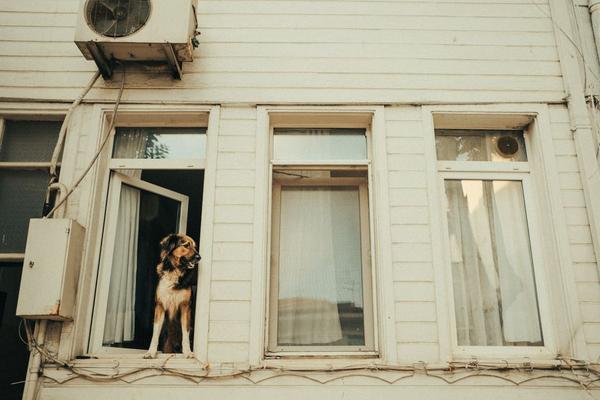
A dog can notice a departure long before anyone opens the front door. The sound of keys, a familiar pair of shoes, or a change in the morning routine may prompt a glance toward the hallway. Another dog barely reacts until the house becomes quiet. These small differences make dog separation behavior worth observing as a sequence rather than judging from one bark or one restless moment.
Dogs form social bonds and learn daily patterns, but they do not all respond to time apart in the same way. Understanding what happens before, during, and after an absence helps owners distinguish ordinary anticipation from behavior that may indicate difficulty coping.
Separation Behavior Begins Before the Door Closes
Many dog separation signals appear during preparation. A dog may follow someone from room to room, stand near the exit, stop playing, or watch closely as a bag is packed. These actions can reflect learned expectations: the dog has noticed that a particular chain of events usually ends with someone leaving.
Context matters. Following an owner through the kitchen might simply mean the dog expects breakfast. Following only when work shoes appear may reveal a stronger association with departure. Canine attachment behavior is best understood through recurring situations, not a single gesture.
Watching, following, and waiting
Door watching is especially easy to misread. A relaxed dog might glance at the entrance and then settle on a bed. An unsettled dog may remain fixed on the door, shift position repeatedly, or struggle to disengage. Pay attention to the dog’s whole posture, breathing, and ability to return to a normal activity.
What Happens Immediately After Departure?
The first minutes alone often reveal the clearest separation patterns. Some dogs investigate the room, drink water, and sleep. Others move repeatedly between a window and the doorway. Vocalizing may take the form of short barks, whining, or sustained howling. Pacing can trace the same route again and again.
Frequency and intensity change the meaning. A brief bark at a passing vehicle is different from persistent calling that begins each time the owner leaves. Likewise, a single trip to the door is different from continuous circling accompanied by panting or drooling.
More concerning dog alone behavior can include scratching or chewing at exits, attempts to escape, indoor toileting, and refusing food that the dog normally enjoys. These signs deserve attention, especially when they occur repeatedly around absences. They are observations, however, not a diagnosis on their own.
Quiet Does Not Always Mean Comfortable
A dog that makes no noise can still be restless. Some remain standing for long stretches, watch the entrance without settling, or repeatedly interrupt a rest position. Others become unusually still. This is one reason a tidy home and the absence of neighbor complaints cannot confirm that a dog is comfortable alone.
The useful question is whether the dog can relax. Normal resting, changing positions, exploring calmly, and returning to sleep suggest a different experience from prolonged vigilance. A short home-camera recording can reveal this distinction without changing the dog’s usual routine.
Triggers and Routines That Shape the Pattern
Dogs learn associations through repetition. Car keys may become meaningful only because they regularly precede an absence. A school-day departure might produce a different response from an evening trip, even when the same person leaves.
Several circumstances can influence what owners see: changes in work schedules, moving house, changes in household members, unfamiliar noises, and being confined behind a gate or door. Fear of confinement and reactions to outside sounds can resemble separation-related distress, so the setting deserves as much attention as the behavior.
Duration matters too, but not in one universal way. One dog becomes unsettled immediately after departure; another copes initially but grows restless later. Dogs may also respond differently when a particular person leaves, when everyone leaves, or when another familiar person stays home.
How to Map Your Dog’s Separation Patterns
Consider a dog named Milo. At 8:15 a.m., Milo watches his owner put on a jacket. After the door closes, he paces for two minutes, then lies down and sleeps. On another morning, construction noise starts outside and he continues moving between the window and hallway. Without noting both the departure and the noise, the second episode could easily be blamed on separation alone.
For several ordinary departures, record when preparations begin, who leaves, whether anyone stays, and the dog’s first reaction. Note the time until the dog settles, any vocalizing, repeated movement, interest in food, and outside disturbances. Keep recordings short enough to review carefully, but long enough to see whether the behavior resolves or persists.
Compare like with like. A weekday morning and a quiet weekend afternoon may produce different responses. Patterns across multiple observations are more informative than one unusual day. Learning common dog body language cues can also help you describe what you see without guessing at the dog’s feelings.
Responding to What You Observe
If your dog generally settles, preserve the routines that support that calm behavior: predictable opportunities for exercise, toileting, rest, and suitable enrichment. A comfortable resting place and a safe food puzzle may help some dogs, but food is not a reliable distraction for an animal already distressed.
When a dog becomes upset, avoid testing how long it can endure an absence. Practice separations shorter than the point at which distress begins, then increase them gradually only while the dog remains comfortable. Departure cues can also be practiced without actually leaving, so they become less predictive. These steps should be gentle, not repeated until the dog is overwhelmed.
Never punish barking, accidents, or damaged objects discovered after returning. If behavior is persistent, escalating, or involves escape attempts or possible injury, speak with a veterinarian and a qualified behavior professional. Sudden changes, especially in an older dog, also warrant a veterinary check because pain, sensory changes, or other health problems can affect behavior.
Frequently Asked Questions
Is following me around the house a sign of separation anxiety?
Not necessarily. Dogs follow people for attention, company, food, or because they anticipate an activity. More useful evidence comes from how the dog behaves when that person actually leaves and whether it can settle afterward.
Why does my dog watch the door when I leave?
The door is a familiar place associated with arrivals and departures. Brief watching may be ordinary anticipation. Prolonged fixation, pacing, or other signs of distress provide a reason to investigate further.
Can a dog struggle with separation without barking?
Yes. Restlessness, repeated pacing, trembling, panting, or an inability to settle may occur without vocalizing. Video can help reveal dog separation behavior that would otherwise go unnoticed.
Does a second dog always solve separation problems?
No. Some dogs are comforted by canine company, but others are specifically distressed when a particular human leaves. Adding another dog should not be treated as a guaranteed solution or substitute for understanding the existing pattern.
Conclusion
The clearest picture of dog separation behavior comes from timing, context, and repetition. Watch what predicts a departure, what happens after it, and whether the dog can settle. Those observations can reveal ordinary habits, highlight preventable triggers, and show when professional support would be helpful.