A line of footprints across a muddy creek bank can reveal which species passed through, its direction of travel, and whether it was walking or bounding. Wild mammal tracks identification begins with a simple habit: examine the trail before deciding what made a single print.
Across North America, deer, foxes, coyotes, cats, bears, raccoons, and smaller mammals leave recognizable clues. You need only careful observation and a willingness to leave some tracks unidentified.
Start With Five Clues, Not a Guess
For reliable animal tracks identification, record overall shape, toe count, claw impressions, dimensions, and track pattern. Look for the clearest print in a sequence. One distorted impression can make a familiar animal look different.
Shape, Toes, and Claws
Hoofprints often show two pointed halves, pawprints reveal toe pads around a larger pad, and handlike prints may display five slender digits. Most visible canine and feline pawprints show four toes. Canines commonly leave claw marks; cats usually do not, although conditions can hide canine claws or reveal feline claws.
Measure the Print Properly
Place a ruler beside the print and photograph it from directly above. Measure length from the foremost toe to the back of the main pad, and width at the widest point. Record distant claw scratches separately. Size narrows possibilities but rarely identifies a species by itself: a domestic dog can overlap with a wild canid.
Match Common North American Mammal Footprints
Coyotes, Foxes, Wolves, and Domestic Dogs
Canid prints tend to be oval, fairly symmetrical, and four-toed, often with visible claws. Fox prints are generally smaller than coyote prints, while wolf tracks are usually larger. Size varies, and domestic dogs can resemble wild canids. A coyote traveling steadily may leave a narrow, direct trail; a wandering dog often zigzags, although neither behavior proves identity.
Inspect several consecutive wildlife tracks rather than relying on a supposed X shape between the pads. That empty space changes with mud, snow, and foot placement. A closer look at coyote and wolf behavior helps explain why track patterns matter as much as pawprints.
Bobcats and Mountain Lions
Feline prints are generally rounder than canid prints, with four toes, a broad central pad, and claws usually absent. The toes often look unevenly arranged rather than symmetrical. A mountain lion typically leaves a larger print than a bobcat, but young animals and poor impressions complicate comparisons.
The rear edge of a clear feline heel pad commonly shows three lobes, while canine pads generally show two. Use this alongside size and toe placement, not as a stand-alone test. Compare bobcat tracks and mountain lion tracks with a regional field guide.
Deer, Elk, and Moose
Deer-family animals leave paired hoof marks instead of paw pads. White-tailed deer prints often resemble pointed teardrops, with the points indicating travel direction. Elk and moose typically leave larger, broader tracks, but age, ground conditions, and location matter. Extra dewclaw marks sometimes appear behind the main hooves, especially in deep mud or during faster movement.
Bears and Raccoons
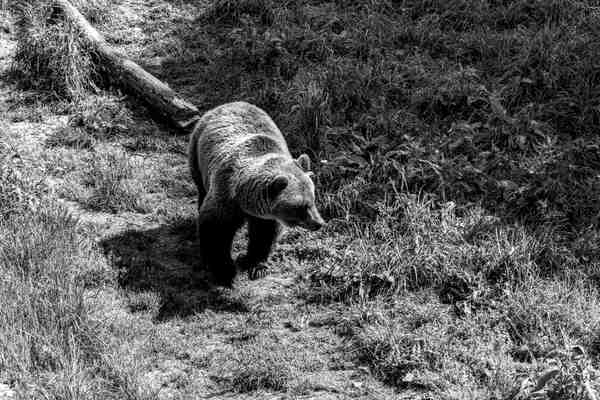
Bear prints commonly show five toes. Front prints are broad, while hind prints may have a long, footlike outline. Black bear and brown bear tracks differ in toe arrangement and claw length, but tracks alone may not confidently identify them where both occur. Never follow fresh bear tracks to locate the animal; move away calmly and follow local wildlife-safety guidance.
Raccoon tracks also have five digits, yet resemble small hands, with long separated toes. Front and hind feet differ in shape; a trail near shallow water may show crisp prints. Comparing bear tracks with raccoon tracks is a useful exercise in looking beyond toe count.
Rabbits, Squirrels, and Other Small Mammals
Rabbit tracks often appear as groups of four: two large hind-foot impressions land ahead of two smaller front-foot impressions during a hop. Squirrels also bound in groups, but hind prints are usually set roughly side by side, while front prints may be closer or staggered. Many tree squirrels show four toes on front feet and five on hind feet when conditions preserve them.
Mice may leave tiny paired impressions and sometimes a tail drag. Opossums can leave five-toed tracks, with a sideways thumb on the hind foot. Otters may show five toes and occasional webbing, though these details do not always register. Follow the trail toward habitat clues before choosing between lookalikes.
Read the Gait: The Trail Is Part of the Evidence
A walking mammal leaves an alternating sequence of prints. At a steady trot, some animals place a hind foot close to or directly over a front print. Bounding mammals such as squirrels and weasels produce grouped impressions, while rabbits often show larger hind feet ahead of smaller forefeet. Speed, turns, slopes, and soft ground change these arrangements.
Notice spacing as well as placement. A widening trail or deeper toe impressions may indicate a change in speed or direction. Resist turning every unusual pattern into a dramatic story: one trackway may preserve only a few steps.
A Practical Creek-Bank Tracking Exercise
Imagine finding a four-toed print beside a creek. Photograph it with a ruler, then locate three more prints along the trail. If they are oval, show claw marks, and form a relatively straight sequence, a canid becomes a reasonable possibility. If they are rounder, asymmetric, and lack clear claws, examine feline features instead. Neither conclusion is certain without better prints and local species information.
For your first outing, choose damp sand or firm mud near an established trail. Walk beside the prints, not through them. Record substrate, location, direction of travel, measurements, and a photograph of the whole trail. Avoid disturbing dens or wildlife; never use food to attract animals.
Frequently Asked Questions
What is the easiest way to identify wild mammal tracks?
Start by separating hooves, pawprints, and handlike prints. Compare toe count, claw marks, size, and several steps of the trackway. A regional field guide helps narrow possibilities.
Can you identify an animal from one footprint?
Sometimes, but a single print is often misleading. Partial toes, overlapping feet, and disturbed soil can hide distinctive features. Multiple clear prints provide stronger evidence.
Are tracks easier to see in snow or mud?
Both can preserve excellent tracks. Fresh, shallow snow may reveal travel patterns, while fine, slightly damp mud can capture toe pads. Deep snow and wet mud often distort dimensions.
Why are there no claw marks in some dog or coyote tracks?
Claws may fail to register on firm ground or in shallow impressions. Conversely, a cat can extend its claws. Absence of claws is a clue, never definitive proof.
Keep Following the Evidence
Good tracking is less about naming every footprint than asking better questions. Notice where tracks lead, check first impressions against several clues, and document uncertain finds. With practice, ordinary sand, soil, and snow become readable records of mammals sharing the landscape.