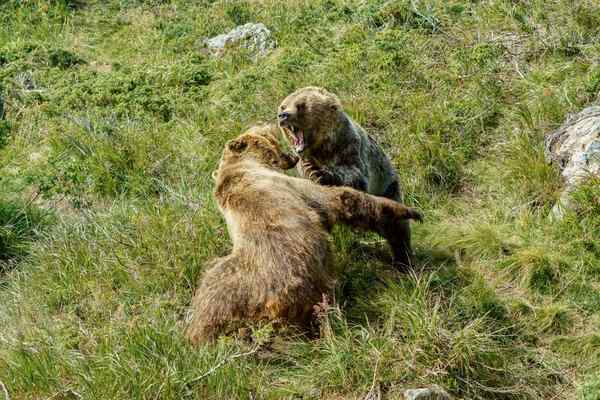
A brown bear steps onto your trail. Is it a grizzly or an American black bear? Color alone cannot answer that question: black bears may be cinnamon or chocolate brown, while some grizzlies look very dark. The best grizzly bear vs black bear identification combines body shape, face, ears, claws, and location. You can check those clues from a safe distance without approaching the animal.
Grizzly vs Black Bear: Quick Identification
The clearest difference is often the shoulder outline. Grizzlies usually have a muscular hump above their shoulders, a dished facial profile, smaller rounded ears, and long front claws. Black bears generally lack a prominent shoulder hump, have a straighter face, taller ears, and short curved front claws.
No single feature is foolproof in every photograph or encounter. Turned heads, thick coats, terrain, and distance can obscure important details. The National Park Service recommends using several characteristics together rather than relying on size or fur color.
Shoulder Hump and Body Profile
The prominent hump is among the most useful grizzly bear features. It is muscular tissue above the front legs that helps grizzlies dig for roots and other foods. Viewed from the side, a grizzly often has shoulders higher than its rump, giving the back a distinctive raised outline.
Black bear features typically include a flatter shoulder line and a rump that may rise above the shoulders. A bear lowering its head or walking over uneven ground can temporarily change its outline, however. Watch only from your current safe position and look for a combination of clues.
Face Shape and Ear Size
A grizzly’s profile tends to look dished or concave between the eyes and the nose. Its ears appear short and rounded, partly because they sit on a relatively large head. An American black bear typically has a straighter forehead-to-muzzle line and taller, more prominent oval ears.
These differences are easier to notice in a clear side view than when the animal faces you. A young grizzly may also look less massive than expected. If the face suggests one species but the shoulders suggest another, do not force a confident answer.
Grizzly vs Black Bear Size and Color
Grizzlies are generally larger and heavier than black bears, but age and sex produce substantial overlap. A large adult male black bear can outweigh a smaller female or immature grizzly. Judging size across a meadow without a familiar object for scale is difficult anyway.
Coat color is particularly misleading. Black bears occur in black, cinnamon, brown, and occasional pale color forms. Grizzlies may be blond, brown, or almost black. Some have pale-tipped guard hairs that create a grizzled appearance, but not every grizzly does. Prioritize the shoulder hump, head, and ears.
Claws and Footprints
Grizzly front claws are generally longer and less curved, suited to digging. Black bears have shorter, more curved front claws that help them climb. Never approach a bear closely to examine its paws; claw shape is most useful in clear photographs or tracks left after the bear departs.
On a grizzly front track, the toes tend to form a comparatively straight line, and long claw marks can appear well ahead of the toes. Black bear toes commonly form a more pronounced arc, with claw marks close to the toes or missing. Mud, snow, and movement can distort either pattern.
If you find footprints, leave the area rather than following them toward a bear. A separate guide to bear tracks and signs is a useful way to compare prints later in a safer setting.
Where Each Bear Lives
American black bears are widely distributed, including much of the eastern United States, the Appalachians, and many western forests. In the contiguous United States, grizzly populations occur mainly in parts of the northern Rocky Mountains, including the Greater Yellowstone and Northern Continental Divide ecosystems. Both species also inhabit Alaska.
Their ranges overlap in several western areas, including Glacier and Yellowstone national parks. Habitat alone does not identify the bear: both species use forests, and grizzlies also forage in open landscapes. Location changes the odds, not the physical evidence.
Can You Tell Them Apart by Behavior?
Not reliably. Black bears are agile climbers, while grizzlies are powerful diggers, but both species can run, forage, investigate odors, and stand on their hind legs. Standing upright often helps a bear see or smell; it is not automatically a threat display.
A surprised bear or a mother protecting cubs may behave defensively regardless of species. Never try to test whether a bear is aggressive, and never treat a black bear as harmless simply because it is smaller on average.
A Trail Example and Safer Response
Suppose you see a cinnamon-colored bear across a meadow in Glacier National Park. The brown fur initially makes you think ‘grizzly.’ Then you notice a straight face, tall ears, and no obvious hump. Together, those details favor a black bear. You still stay back rather than moving closer to confirm your guess.
During any bear encounter, avoid running. Stay calm, speak in a normal voice if the bear notices you, keep your group together, and slowly back away when it is safe. Follow park guidance on distances, food storage, and wildlife closures. Carry accessible bear spray where permitted and practice using it before entering bear country.
Attack responses differ. National Park Service guidance generally advises fighting back if a black bear attacks, while playing dead is recommended for a defensive grizzly attack. If a bear persistently stalks and attacks you, or attacks in a tent, fight back regardless of species. These are serious distinctions best learned through bear safety and bear spray guidance before a trip.
Frequently Asked Questions
Can a black bear have brown fur?
Yes. Cinnamon and brown coats occur in American black bears. A bear’s color should never be the deciding clue for identification.
Which species has a shoulder hump?
Grizzlies typically have a pronounced hump of muscle above the front shoulders. American black bears lack that distinctive feature.
Are grizzlies always bigger than black bears?
No. Grizzlies are generally larger, but individual sizes overlap. Younger grizzlies can be smaller than fully grown black bears.
Should I get closer to check a bear’s face or claws?
No. Maintain a safe distance and accept uncertainty if the view is unclear. Accurate identification is never worth approaching a wild bear.
The Takeaway
Start with silhouette: a grizzly’s shoulder hump, dished face, and smaller ears contrast with the black bear’s flatter shoulders, straighter face, and taller ears. Tracks and range can support the identification, but size and fur color may mislead. Remember the features, keep your distance, and put safety before certainty.