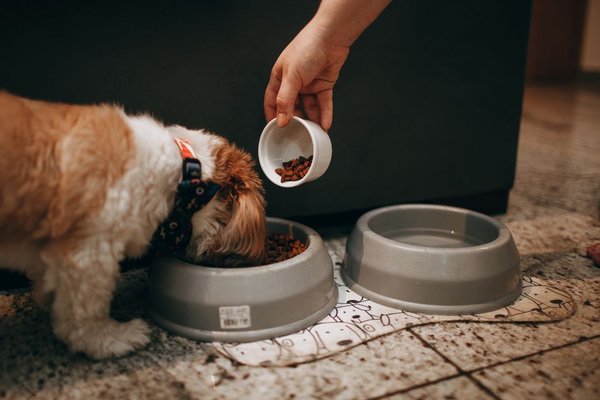
A dog’s food bowl may look the same throughout life, but what belongs in it changes considerably. A rapidly growing puppy needs a different balance of nutrients and meal timing from a settled adult. An older dog may need fewer calories, yet still benefit from a diet that supports muscle. This dog feeding guide by age explains how to adapt meals without relying on rigid, one-size-fits-all portions.
Dog Feeding Schedule at a Glance
For healthy dogs, these age ranges offer a practical starting point. Your veterinarian may recommend a different routine for a particular breed, medical condition or growth pattern.
From weaning to about six months, most puppies do well with three measured meals daily; very young or toy-breed puppies sometimes require more frequent feeding. Between roughly six and twelve months, two meals usually work well. Most adult dogs continue with two meals a day. Seniors can often keep the same routine, although some find smaller, more frequent meals easier to manage.
These are meal-frequency guidelines, not fixed quantities. What you feed and how much also need to change as your dog matures.
Puppy Feeding Guide: Supporting Healthy Growth
Choose a Food Made for Growth
Puppies need a complete and balanced growth diet with adequate energy, protein, fat and carefully balanced minerals. In the United States, check the nutritional adequacy statement on the label rather than assuming that any food advertised as natural or premium meets puppy needs.
Large- and giant-breed puppies deserve particular attention. Their food should specifically be suitable for growth of large-size dogs, with controlled mineral balance and energy intake. Extra calcium supplements can be harmful when a complete growth diet already provides the necessary nutrients.
Feed Regularly, Then Reduce Meal Frequency
Divide the daily ration into meals instead of constantly topping up the bowl. Regular feeding makes it easier to notice appetite changes, plan toilet breaks and prevent unintentional overfeeding.
For example, a four-month-old Labrador puppy might eat breakfast, lunch and dinner, with a little of the measured daily allowance reserved for training. As the puppy grows, the owner can transition toward two meals while adjusting total calories according to weight and body condition. The goal is steady, lean growth, not getting big as quickly as possible.
Adult Dogs: Maintain Energy Without Excess Calories
Once growth is complete, most dogs move to a complete and balanced adult-maintenance diet. Choose a food appropriate for the dog’s activity level and health, then build a predictable dog feeding schedule around it.
Two measured meals, typically morning and evening, are convenient for many households. Free-feeding makes it harder to spot reduced appetite or measure consumption and can contribute to weight gain in dogs that graze too enthusiastically.
Energy needs vary with activity and may change after neutering. Reassess portions after major lifestyle changes rather than assuming the original serving remains right.
Senior Dog Nutrition: Focus on Condition, Not a Birthday
There is no universal age at which every dog becomes a senior, and foods labeled senior do not follow one single nutritional formula. A healthy older dog doing well on balanced adult food may not need an automatic switch.
What deserves attention is the dog in front of you. Some older dogs become less active and gain fat on familiar portions. Others lose weight or muscle, develop dental problems or struggle with an underlying illness. A veterinarian can help distinguish normal aging from changes that require treatment.
Senior dog nutrition should protect adequate protein intake and muscle condition unless a diagnosed disease requires a specific therapeutic diet. Do not routinely restrict protein simply because a dog is older. Food texture, appetite and hydration can also influence the best choice.
If your senior dog suddenly drinks much more, eats less, loses weight or has difficulty chewing, arrange a veterinary assessment rather than trying to fix the problem with a new food alone.
How to Calculate and Adjust Dog Portion Sizes
Start with the feeding guide on a complete-food package, but treat the printed amount as an estimate. Different foods contain different calories per cup or gram, and the correct daily amount depends on the individual dog. Your veterinary team can estimate calorie needs more precisely.
Use Body Condition as Your Feedback
When you gently feel your dog’s ribs, they should usually be easy to detect beneath a thin layer of fat without being prominently visible. From above, most healthy dogs show a waist; from the side, an abdominal tuck. Breed differences matter, so ask your veterinarian to demonstrate a body condition score.
Weigh food with a kitchen scale when possible. Cups can be inconsistent, especially with different kibble shapes. Track body weight regularly and make modest portion adjustments based on trends, rather than reacting to a single day’s appetite.
Consider a dog eating 400 calories of complete food daily with 100 additional calories in biscuits. Those biscuits account for one-fifth of the day’s 500 calories, leaving too much room for nutritional imbalance. A useful general rule is to keep treats and other extras at no more than about ten percent of daily calories.
Everyday Habits That Make Feeding Safer
Keep fresh water available, store food correctly and wash bowls regularly. Measure treats as part of the daily allowance. If several people feed the dog, keep a shared note to avoid double dinners.
When changing foods, make the switch gradually over roughly four to seven days if your dog tolerates it, mixing increasing amounts of the new diet with the old. Dogs with sensitive digestion may need a slower plan from their veterinarian.
Avoid making homemade diets the main food without a recipe formulated by a qualified veterinary nutrition specialist. Well-intended recipes can miss essential nutrients. For related reading, explore topics such as reading dog food labels, safe treats for dogs and monitoring a dog’s body condition.
Frequently Asked Questions
How many times a day should I feed my puppy?
Many puppies from weaning to six months eat three meals daily, then transition to two. Very small or medically vulnerable puppies may need a different schedule. Ask your veterinarian if you are unsure.
When should I switch from puppy to adult dog food?
Switch when your dog is approaching skeletal maturity, not simply on a fixed birthday. Small breeds often mature sooner than giant breeds. Your veterinarian can help time the transition.
Should older dogs always eat senior food?
No. A healthy older dog may continue thriving on a balanced adult diet. Changes in weight, muscle, appetite or medical needs should drive the decision.
How do I know whether my dog’s portions are right?
Check body condition, record weight over time and account for every treat. If your dog is gaining or losing weight unexpectedly, request a veterinary feeding assessment rather than making large unsupervised changes.
A Feeding Plan That Grows With Your Dog
Good feeding is less about finding one perfect number and more about reviewing the right signals. Choose complete food for the appropriate life stage, measure the daily amount, watch body condition and adjust with veterinary guidance. That simple routine can serve your dog from the earliest puppy meals through the senior years.