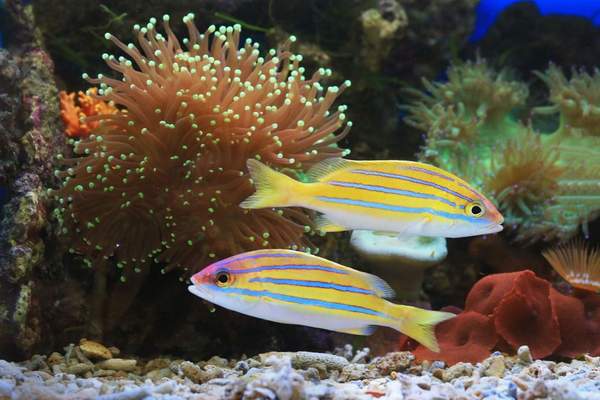
The best beginner saltwater fish are not necessarily the smallest or most colourful species in the shop. A good first choice eats readily, suits your available space and gets along with compatible neighbours. Some fish that look peaceful become territorial around a favourite cave; others require a secure lid or a particular diet.
This guide compares six approachable marine species by tank size, temperament and feeding habits. Treat it as a shortlist for your first marine tank, not a list to purchase all at once.
What makes a saltwater fish beginner-friendly?
Hardy saltwater fish still need stable, fully cycled water. Before buying, confirm that ammonia and nitrite remain at zero, salinity and temperature are steady, and the aquarium has adequate filtration. An advertised minimum tank size is a starting point, not permission to overcrowd.
Ask whether the fish accepts prepared food, hides or swims openly, jumps when startled, and competes with animals occupying the same area. Captive-bred specimens are worth seeking when available because they are often accustomed to aquarium feeding and reduce pressure on wild populations.
Six of the best beginner saltwater fish compared
Ocellaris clownfish: best all-round first fish
The orange-and-white ocellaris clownfish is a reliable introduction to marine fishkeeping. A single fish can live in a well-maintained aquarium of about 20 gallons or more; a larger tank gives a pair more room and makes water conditions easier to manage. Captive-bred examples usually accept quality marine pellets and frozen foods.
Clownfish do not need an anemone. They may defend a chosen corner, particularly when paired or breeding, so friendly looks do not guarantee peaceful behaviour. Consult an ocellaris clownfish care guide for pairing and feeding advice before buying two.
Royal gramma: best colour with a cave to call home
With a vivid purple front half and yellow tail, the royal gramma looks spectacular without demanding a huge display. Plan on at least 30 gallons, rocky hiding places and a varied meaty diet, such as appropriate marine pellets and frozen mysis shrimp.
Royal grammas are generally peaceful with dissimilar tankmates but may defend a favourite crevice. Keeping one is the straightforward beginner option. Do not confuse this species with the more argumentative bicolour dottyback, which has similar colouring but different social behaviour.
Firefish goby: best for a gentle community
The firefish, or fire dartfish, hovers above the rockwork and darts into shelter when alarmed. A 20-gallon or larger aquarium with retreats suits this peaceful species. Offer small meaty foods and avoid boisterous tankmates that monopolise meals.
A tight-fitting lid is essential: firefish can jump. Keep one unless you have a verified compatible pair; unrelated individuals may quarrel. This is an appealing beginner reef fish when calm surroundings matter more than constant activity.
Yellow watchman goby: best for sandbed personality
A yellow watchman goby peers from its burrow like a tiny guard. Allow around 30 gallons or more, a suitable sandy area, and rockwork secured so digging cannot undermine it. Offer sinking or target-fed meaty foods that reach the bottom.
Some watchman gobies form partnerships with pistol shrimp, but that relationship is optional and cannot be guaranteed. Avoid another territorial burrow-dwelling goby in a cramped tank. A watchman goby care guide can help you plan the sandbed, shelter and feeding routine.
Tailspot blenny: best small fish with character
The tailspot blenny is a watchful little percher that browses surfaces and darts into rock crevices. Although some listings give a minimum of 10 gallons, a mature 20-gallon setup is a more forgiving beginner choice. Provide rock with grazing surfaces and food containing marine algae.
Do not buy one solely to control algae. It needs deliberate feeding even when the rocks look green, and it can compete with similarly shaped fish for perches. Few easy marine fish are as entertaining to watch in a compact aquarium.
Captive-bred Banggai cardinalfish: best measured swimmer
The Banggai cardinalfish has striking black bands, white spots and long fins. It suits a settled aquarium of at least 30 gallons, where it can hover near shelter and eat appropriately sized meaty marine foods. Choose a captive-bred specimen whenever possible.
Despite its slow movements, this species can fight with its own kind. An unpaired group is not a safe default; a single cardinalfish is simpler. Check that a prospective purchase eats prepared food, since individuals vary in their willingness to try unfamiliar diets.
Which fish fits your first marine tank?
For a straightforward 20-gallon display, a captive-bred ocellaris clownfish is a strong starting point. If you prefer something quieter and have a covered aquarium, consider one firefish. A tailspot blenny suits a mature, rock-filled setup with suitable grazing food.
With 30 gallons or more, a royal gramma offers colour, a yellow watchman goby adds sandbed behaviour, and a Banggai cardinalfish provides an open-water contrast. Tank shape, territories, feeding and stocking density determine whether any combination will work.
Imagine a 30-gallon tank with central rockwork and open sand in front. A clownfish and a watchman goby use different areas, making them potentially compatible after planning. Adding a royal gramma could still start a dispute if there is only one sheltered cave. Extra rock passages and patient introductions matter more than collecting another colour.
Prepare the aquarium before bringing fish home
Cycle the biological filter without fish and confirm it processes waste before stocking. Match replacement saltwater to the tank’s temperature and salinity, use a dependable salinity measuring instrument, and test water regularly. Introduce fish gradually so filtration can adjust to the increased waste load.
Watch prospective purchases eat and swim normally. Quarantine or follow a responsible disease-prevention protocol, and do not pour shop water into the display. A marine aquarium cycling guide can help you prepare the system before buying livestock.
Frequently asked questions
What is the easiest saltwater fish for beginners?
A captive-bred ocellaris clownfish is often the safest all-round recommendation because it is widely available, generally eats prepared food and adapts well to an appropriate aquarium. Stable water remains essential.
Can beginner saltwater fish live in a 10-gallon tank?
A few small species can, but 10 gallons leaves little margin for temperature, salinity or stocking mistakes. A 20- to 30-gallon aquarium usually provides a more forgiving start.
Are these fish safe for coral reefs?
These species are generally considered reef-compatible, but behaviour is never guaranteed. Check each fish’s habits around ornamental shrimp, corals and potential tankmates before mixing them.
Should I add several fish at once?
No. Add suitable fish gradually after cycling, monitor ammonia and nitrite, and allow filtration and territorial behaviour to settle before the next introduction.
Choose for behaviour, not just colour
The most successful first marine tank is built around a few well-matched animals. Start with the fish whose feeding, space and temperament fit your setup, then research its individual care requirements. That measured approach beats chasing every attractive species in the shop.