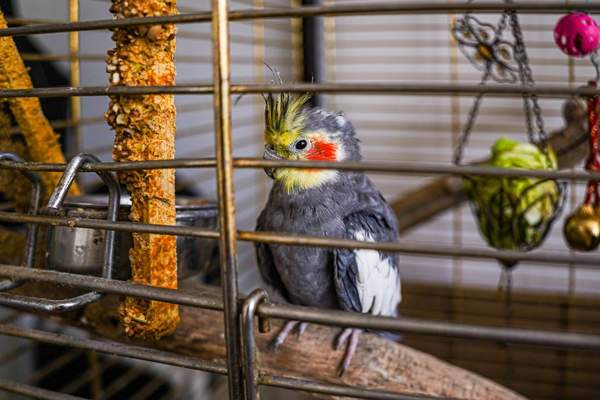
Bringing home a cockatiel is exciting, but good care is less about buying lots of accessories and more about creating a safe, predictable daily life. Cockatiels are social and quick to form routines. For a new owner, the essentials are straightforward: enough space, balanced food, gentle handling, mental stimulation, reliable sleep, and prompt veterinary attention when something seems wrong.
Set Up a Safe, Roomy Cockatiel Cage
The cockatiel cage is your bird’s home base, not simply a place to sleep. VCA Animal Hospitals gives a general minimum of about 2 feet by 2 feet by 3 feet (60 by 60 by 90 cm) for one cockatiel, and larger is better when space allows. Your bird should be able to stretch and flap its wings, climb, and move between perches without constantly brushing its feathers against the bars.
Choose a sturdy rectangular cage with safe bar spacing that prevents the bird from getting its head caught. Use several perches of different diameters rather than identical smooth dowels, and keep bowls where droppings cannot easily fall into them. Place the cage in a social part of the home but away from kitchen fumes, cigarette smoke, aerosols, strong fragrances, direct heating or air-conditioning, and other hazards.
Build a Balanced Cockatiel Diet
A seed bowl may look traditional, but an all-seed diet is not nutritionally complete. A practical cockatiel diet uses a quality formulated pellet as the main food, with smaller amounts of fresh vegetables, leafy greens, and limited fruit. Veterinary guidance commonly places pellets at three-quarters of the diet, while fresh produce makes up a smaller portion and seeds are kept as a minor part or training reward.
Provide fresh, clean water at all times and wash food and water dishes daily. Remove moist fresh foods after a couple of hours, especially in warm rooms. Avoid avocado, onion, chocolate, alcohol, and caffeine. If your cockatiel currently eats mostly seed, do not abruptly remove its familiar food. A gradual transition, ideally planned with an avian veterinarian, is safer because some birds resist unfamiliar pellets.
A practical example is to offer vegetables in the morning, then reserve millet for step-up practice later. That makes a favorite treat useful without allowing it to dominate the diet. Related reading on cockatiel-safe foods, pet bird nutrition, and foods that are toxic to birds can help owners build a better feeding routine.
Handle Your Cockatiel at Its Pace
Many beginners want a tame bird immediately, but trust is built through repetition. For the first few days, let a new cockatiel observe its surroundings and learn your voice. Sit near the cage, speak calmly, and move deliberately. Once the bird is eating, drinking, and behaving normally, begin short training sessions.
Teach the bird to step onto a finger or handheld perch using a consistent cue such as “step up,” followed by a small reward. Never chase the cockatiel around the cage with your hand. If it leans away, hisses, opens its beak, or moves to escape, reduce the pressure and try again later.
When your cockatiel is comfortable outside the cage, supervise every session in a bird-safe room. Close windows and exterior doors, switch off ceiling fans, cover obvious hazards, and keep other pets separated. If your bird enjoys touch, gentle scratches around the head and neck are usually preferable to stroking the back or body, which can encourage hormonal behavior in some parrots.
Learn What Cockatiel Behavior Is Telling You
Cockatiel behavior becomes easier to read when you watch patterns rather than isolated gestures. A relaxed bird may preen, softly whistle, or sit with feathers comfortably fluffed. A raised crest often signals interest or alertness, while a tightly flattened crest, hissing, lunging, or repeated attempts to move away can mean the bird wants space.
Changes from normal matter most. A usually active cockatiel that suddenly becomes quiet, stays fluffed for long periods, eats less, sits low, breathes with effort, or shows a major change in droppings should be assessed promptly by a veterinarian experienced with birds. Birds can hide illness, so waiting for dramatic symptoms may delay care.
Provide Daily Enrichment and Exercise
Cockatiels need things to do. Rotate safe chewable toys, climbing opportunities, swings, and simple foraging activities rather than filling the cage with everything at once. You can hide a few pellets or tiny seed rewards in bird-safe foraging materials so your cockatiel has to search and manipulate objects to find them.
Supervised time outside the cage provides exercise and social contact. Consistency matters more than an occasional marathon session. A bird that knows when breakfast, interaction, training, and bedtime happen often settles more easily than one whose day changes constantly.
Make Sleep and Grooming Part of the Routine
Give your cockatiel a long, quiet, consistent period of darkness each night. Many companion cockatiels do well with 10 to 12 hours of uninterrupted rest, although individual needs vary. Keep bedtime predictable, reduce late-night noise and light, and use a secure cage for overnight sleep.
For grooming, offer a shallow bath or gentle mist if your bird enjoys it. Nails may occasionally need trimming, but beginners should ask an avian veterinarian or experienced professional to demonstrate safe technique. Beak overgrowth, abnormal feather damage, persistent bald areas, or repeated difficulty perching are reasons to seek veterinary advice rather than trying home fixes.
A Simple Daily Care Rhythm
A workable routine might be fresh water and breakfast in the morning, a quick cage check, several minutes of calm interaction, enrichment while you are away, and supervised exercise or training later. Replace cage-liner paper regularly so droppings are easy to monitor, wipe dirty surfaces, and wash bowls daily. Arrange routine veterinary examinations with a bird-experienced veterinarian, including an early wellness visit after bringing a new cockatiel home.
Frequently Asked Questions
Is a cockatiel a good bird for a first-time owner?
Yes, cockatiels can be rewarding first birds for owners who are prepared for daily interaction, cleaning, training, veterinary care, noise, and a long-term commitment. Friendly does not mean maintenance-free.
How often should I let my cockatiel out of the cage?
Provide regular supervised out-of-cage time as your schedule and home safety allow. The exact duration matters less than consistent opportunities to move, explore, train, and interact without unsupervised access to household hazards.
Can cockatiels live on seeds alone?
No. Seed-only diets are nutritionally unbalanced and can contribute to health problems. A formulated pellet should generally form the dietary base, supported by suitable vegetables and smaller amounts of fruit and seed.
How do I know if my cockatiel trusts me?
Trust develops gradually. A comfortable cockatiel may eat while you are nearby, approach you, accept treats, respond to your voice, preen in your presence, or step up willingly. Let these behaviors develop without forcing contact.
Give Good Care Through Consistency
Cockatiel care for beginners becomes easier once the essentials are built into a repeatable routine. Give your bird a spacious, safe home, a balanced diet, patient handling, daily enrichment, protected sleep, and regular veterinary care. Then watch the individual bird in front of you. Its appetite, posture, sounds, preferences, and willingness to interact will tell you a great deal about whether the routine is working.