Dog enrichment has moved from a specialist training idea to an everyday part of pet care, helped by the popularity of puzzle, sniffing and food-game videos online. The useful lesson behind the trend is simple: dogs need chances to think, investigate, solve problems and use natural behaviours, not just physical exercise.
You do not need a cupboard full of gadgets. The best dog enrichment activities at home are safe, achievable and suited to your dog’s age, confidence and energy. Begin with easy wins, keep sessions short and supervise homemade games. Count food rewards as part of your dog’s daily allowance.
Food-Based Enrichment for Everyday Meals
1. Scatter-Feed Part of a Meal
Scatter a measured portion of kibble across a clean rug, patio or easy-to-clean floor. Begin in a small area, then spread the pieces farther apart. This turns an ordinary meal into a simple sniffing challenge.
2. Use a Snuffle Mat
Tuck dry food between the fabric strips and let your dog search at their own pace. Put the mat away if your dog starts chewing it rather than sniffing for food.
3. Serve Dinner in a Puzzle Feeder
Puzzle feeders ask dogs to move panels, roll sections or explore compartments. Choose an easy design first, because an overly difficult puzzle can create frustration instead of useful mental stimulation for dogs.
4. Fill and Freeze a Rubber Food Toy
Stuff a correctly sized rubber toy with soaked kibble or suitable wet food. Introduce it unfrozen before making it harder. Use only dog-safe ingredients; peanut butter must be free from xylitol.
5. Make a Muffin-Tin Puzzle
Place food in several muffin cups and cover them with dog-safe balls too large to swallow. Leave some cups uncovered for the first attempt, then increase the challenge as your dog learns.
6. Roll Treats in a Towel
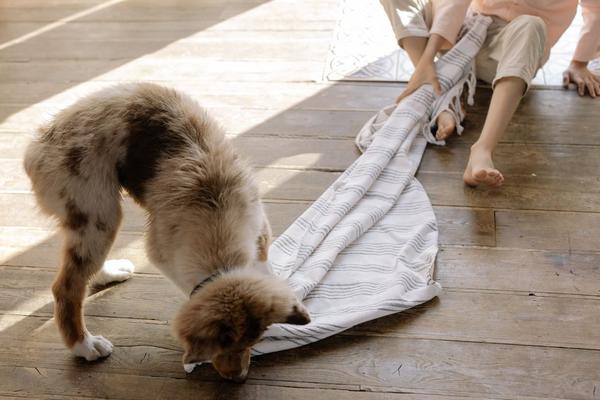
Sprinkle kibble across an old towel and roll it loosely. Encourage your dog to unroll it with their nose and paws. Supervise closely, especially if your dog likes swallowing fabric.
7. Build a Cardboard Destruction Box
Fill a clean box with plain paper, cardboard tubes and a few treats. Remove tape, staples and glossy packaging. Skip this activity if your dog tends to eat cardboard rather than shred and search.
Scent Games for Dogs That Need a Mental Workout
8. Create a Treat Trail
Make a short trail with tiny rewards and a larger prize at the end. Add gentle turns as your dog improves, while keeping the route clear of slippery floors and sharp furniture.
9. Play “Find It” Around One Room
Ask your dog to wait while you place treats in easy positions, then release them with a consistent cue. Gradually use less visible hiding places, always away from cables, chemicals and hazards.
10. Try the Cup-Choice Game
Hide a treat under one sturdy cup while your dog watches. Add a second empty cup once the idea is clear. Reward gentle nose touches instead of frantic pawing.
11. Hide a Favourite Toy
Let your dog sniff a familiar toy, then hide it partly behind a chair or curtain. Make the hiding place less visible over time. This works well for dogs motivated more by play than food.
12. Play Human Hide-and-Seek
One person holds the dog while another hides nearby and calls once. When found, reward with praise or play. During a family evening, rotate between two safe rooms for three quick rounds, then stop before excitement becomes excessive.
Training, Movement and Problem-Solving Games
13. Teach the Names of Toys
Say a toy’s name immediately before presenting it. After several short sessions, place it beside another object and ask for the named toy. This can later develop into retrieval or tidy-up games.
14. Practise One New Trick
Break a trick into tiny steps and reward progress. A hand target, slow spin or front paws on a low platform can work, provided the movement suits your dog’s age and physical health.
15. Play the Cardboard-Box Shaping Game
Place an empty box on the floor and reward safe interaction, such as looking, sniffing or placing a paw inside. Letting your dog experiment builds persistence and offers choice.
16. Make a Low Indoor Obstacle Route
Arrange cushions to walk around, a pole laid flat to step over and a stable blanket tunnel. Keep surfaces non-slip and obstacles low. The goal is thoughtful movement, not jumping in a cramped room.
17. Use Tug as a Listening Game
Play with a suitable tug toy, pause, ask for “drop,” then restart as the reward. Use side-to-side movements, allow breaks and stop if teeth touch skin.
18. Play Gentle Indoor Fetch
Roll or lightly throw a soft toy across a clear carpeted area. Add variety by asking for a sit before each turn. Avoid fast sprints and hard-bouncing toys on slippery floors.
19. Set Up a Safe Texture Walk
Create a short route across a folded blanket, rubber-backed mat, shallow cardboard tray and firm cushion. Reward calm exploration and introduce each surface separately rather than forcing your dog forward.
20. Offer a Lick-Mat Wind-Down
Spread a thin layer of suitable wet food over a lick mat after an active game. Secure and supervise the mat, then remove it when the food is finished.
Build a Routine Your Dog Will Keep Enjoying
Enrichment works best through rotation, not constant novelty. Choose two activities a day, perhaps a scent game in the morning and a calm food puzzle later. Notice what makes your dog curious, relaxed or frustrated. A high-energy dog may love box searches, while a cautious dog may prefer an easy snuffle mat.
Reduce the difficulty if your dog walks away, barks repeatedly, paws frantically or destroys equipment. Enrichment should complement walks, rest, social contact and suitable physical exercise rather than replace them. Guides to dog body language, indoor exercise for dogs and safe homemade dog treats are useful next steps when personalising a routine.
Frequently Asked Questions
How long should a dog enrichment session last?
Start with about five minutes and adjust according to your dog’s focus. Several short sessions are often more enjoyable than one long challenge. Finish before fatigue or frustration appears.
Can I provide enrichment without treats?
Yes. Toys, praise, sniffing, gentle play and access to preferred spaces can all be rewarding. Toy searches, hide-and-seek, shaping and texture exploration suit dogs with restricted diets.
Are homemade enrichment toys safe?
They can be when materials are clean, non-toxic, correctly sized and supervised. Remove tape, string, staples and damaged pieces. Use purpose-made alternatives for dogs that swallow cardboard, fabric or plastic.
How do I know a game is too difficult?
A dog that repeatedly gives up, becomes frantic or chews the equipment may need an easier version. Make the reward more visible, remove steps and help them achieve a quick success.
Make Enrichment Part of Normal Home Life
The best routine is not the most elaborate one; it is the one you can repeat safely and adapt to the dog in front of you. Rotate food puzzles, scent games and short training challenges, observe what your dog genuinely enjoys and allow plenty of downtime. Simple materials and thoughtful supervision can make an ordinary week at home far more engaging.