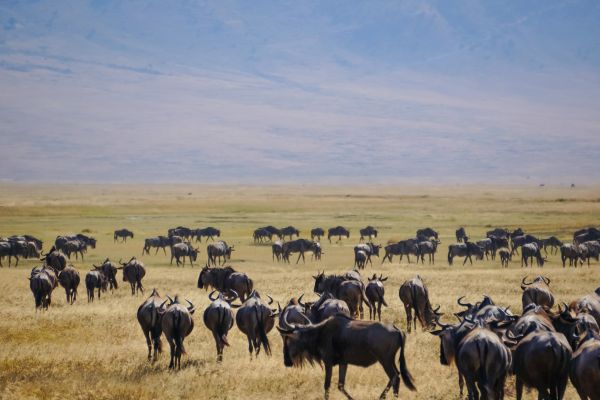
The Hidden Wonder of Rare Wildlife
The natural world is full of animals most people will never see in person. Some live deep in rainforests, others move quietly across mountain slopes, and a few survive in remote deserts, oceans, or wetlands where human presence is rare. These creatures are not just unusual because they look different. Many of them are rare because their habitats are shrinking, their populations are small, or their lives depend on very specific conditions that are becoming harder to maintain.
Rare wild animals remind us that nature is much larger and more mysterious than the familiar images we often see. Lions, elephants, pandas, and tigers receive a lot of attention, and rightly so, but countless lesser-known species are just as fascinating. Some are shy, some are strange-looking, and some seem almost unreal, as if they belong in an old folktale rather than a modern ecosystem.
Learning about rare wild animals is not only interesting. It also helps us understand how fragile life can be when forests are cleared, rivers are polluted, grasslands are broken into pieces, and climates begin to shift.
What Makes an Animal Rare
An animal may be considered rare for several reasons. Sometimes there are only a few individuals left in the wild. In other cases, the species may have a healthy population but live only in one small region of the world. Some animals are naturally rare because they reproduce slowly, need large territories, or depend on a very specific food source.
Rarity does not always mean an animal is immediately close to extinction, but it often means the species is vulnerable. A small population can be deeply affected by disease, hunting, habitat loss, or climate changes. When an animal exists in only one place, damage to that place can threaten the entire species.
This is why rare species matter so much in conservation. They often act as warning signs. If they begin to disappear, something may be going wrong in the wider ecosystem.
The Saola: The Asian Unicorn
The saola is one of the most mysterious rare wild animals on Earth. Found in the forests of Vietnam and Laos, it was only identified by scientists in the 1990s. With its long straight horns, gentle face, and secretive behavior, the saola quickly became known as the “Asian unicorn.”
Despite the nickname, the saola is not a mythical animal. It is very real, but almost never seen. Camera traps have captured only limited images, and sightings are extremely rare. The animal lives in dense forest and avoids human activity, which makes studying it difficult.
Its biggest threats include habitat loss and snares set for other wildlife. Even when hunters are not targeting the saola directly, the animal can still become trapped. This makes its survival especially uncertain. The saola’s story shows how a species can be pushed toward danger before most people even know it exists.
The Amur Leopard: A Ghost of the Snowy Forest
The Amur leopard is one of the world’s rarest big cats. It lives in the cold forests of the Russian Far East and parts of northeastern China. Unlike leopards found in warmer regions, the Amur leopard has a thick coat that helps it survive freezing winters.
This cat is elegant, powerful, and incredibly elusive. It moves through snowy forests with the silence of a shadow. Its long legs help it walk through deep snow, while its spotted coat blends beautifully with woodland light and shade.
For decades, the Amur leopard suffered from habitat loss, poaching, and a shortage of prey. Conservation work has helped its population slowly improve, but it remains highly vulnerable. Its future depends on protected forests, reduced hunting, and safe movement between habitats.
The Aye-Aye: Madagascar’s Strange Night Wanderer
Madagascar is famous for unusual wildlife, and the aye-aye is one of its most unforgettable animals. This nocturnal lemur has large eyes, bat-like ears, and a long thin middle finger used to tap on tree bark and pull out insects. At first glance, it can look a little eerie, but the aye-aye is a remarkable example of evolution’s creativity.
Unfortunately, superstition has made life harder for this animal. In some areas, people have feared the aye-aye or considered it a bad omen. Combined with forest loss, this has contributed to its decline.
The aye-aye plays an important role in its ecosystem by feeding on insects and helping maintain the balance of forest life. Its unusual appearance may make it misunderstood, but it is one of the many reasons Madagascar’s wildlife is so globally important.
The Pangolin: A Quiet Animal Under Heavy Threat
Pangolins are unlike almost any other mammals. Covered in protective scales, they curl into a tight ball when threatened. They feed mainly on ants and termites, using long sticky tongues to gather insects from nests and tunnels.
There are several pangolin species across Asia and Africa, and many are rare or threatened. Their scales and meat have made them targets of illegal wildlife trade. Because they are shy and mostly nocturnal, pangolins are not easy to monitor, which makes conservation even more challenging.
The tragedy of the pangolin is that its natural defense works well against predators but not against humans. When it curls into a ball, it becomes easier for poachers to pick up. Protecting pangolins requires stronger enforcement, habitat protection, and a major reduction in illegal demand.
The Kakapo: The Parrot That Forgot to Fly
The kakapo is a rare flightless parrot from New Zealand. It is large, green, nocturnal, and strangely charming. Unlike most parrots, it cannot fly. Instead, it walks and climbs through forests, relying on camouflage and stillness to avoid danger.
For thousands of years, this worked well because New Zealand had no native land mammals that hunted birds in the same way introduced predators later did. When cats, rats, and stoats arrived, the kakapo was suddenly in serious trouble.
Today, intensive conservation efforts have helped the kakapo survive. Each bird is carefully monitored, and breeding programs are closely managed. The kakapo’s recovery is slow, but it shows what patient conservation can achieve when people commit to protecting a species over many years.
The Vaquita: A Small Porpoise in Great Danger
The vaquita is a tiny porpoise found only in the northern Gulf of California. It is one of the rarest marine mammals in the world. With dark rings around its eyes and a small, gentle-looking face, the vaquita is easy to recognize but almost impossible to see in the wild.
Its greatest threat is accidental capture in fishing nets. Vaquitas are not usually hunted directly, but they can become trapped in nets set for other species. Because their population is extremely small, every loss matters.
The vaquita’s situation is heartbreaking because it highlights how difficult marine conservation can be. Oceans may seem vast, but some species depend on very small areas. When human activity overlaps with those spaces, survival can become a daily risk.
The Okapi: A Forest Animal With a Zebra-Like Secret
The okapi lives in the dense rainforests of the Democratic Republic of Congo. At first glance, it looks like a mix between a horse, a deer, and a zebra, but it is actually related to the giraffe. Its striped legs help it blend into the broken light of the forest.
For a long time, the okapi was unknown to science outside Central Africa. Even today, it remains difficult to study because it is shy and lives in thick forest. Its survival depends on healthy rainforest habitats, which are under pressure from mining, logging, and human settlement.
The okapi is a reminder that rainforests still hold secrets. Even large mammals can remain hidden when they live quietly in places humans rarely enter.
Why Rare Animals Matter to Ecosystems
Rare animals are sometimes seen as less important because their numbers are small. But every species has a role, even when that role is not immediately obvious. Some spread seeds, control insects, shape vegetation, clean up the environment, or serve as prey for other animals.
When rare species disappear, ecosystems may lose pieces of their natural rhythm. One loss can affect another. A missing predator may change prey behavior. A missing seed disperser may reduce forest regeneration. A missing insect-eater may allow certain pests to increase.
Protecting rare wild animals is not simply about saving beautiful or unusual creatures. It is about keeping ecosystems whole.
The Human Connection to Rare Wildlife
Humans are often the cause of wildlife decline, but people can also be part of the solution. Local communities, scientists, conservation groups, forest guards, and ordinary nature lovers all contribute in different ways.
Some protect nesting sites. Some restore forests. Some reduce hunting. Others educate children, support research, or help create safer ways for people and wildlife to share landscapes. In many places, the survival of rare animals depends on whether local communities are respected and included in conservation decisions.
It is easy to feel far removed from a rare animal living in a distant forest or ocean. But the choices people make collectively — about land, food, trade, waste, and climate — travel farther than we think.
A World Worth Paying Attention To
Rare wild animals invite us to look more closely at the planet we share. They show us that nature is not ordinary, even when we become used to it. A forest may seem quiet, but it may shelter animals seen by only a few people in a lifetime. A stretch of ocean may look empty, yet it may hold one of the world’s last small porpoises. A night sound in Madagascar may belong to a creature found nowhere else on Earth.
Their rarity should not make them invisible. It should make us more careful.
Conclusion: Protecting the Unseen and the Unfamiliar
Rare wild animals are more than curiosities. They are living threads in the larger fabric of Earth’s ecosystems. Some are beautiful in a traditional sense, while others are odd, shy, or misunderstood. All of them matter.
Their future depends on habitat protection, thoughtful conservation, stronger laws, and a deeper respect for the natural world. Not every person will see a saola, a kakapo, an aye-aye, or a vaquita, but knowing they exist can still change how we think about wildlife.
In the end, protecting rare animals is also about humility. It reminds us that the world is full of life we do not fully understand, and that our responsibility is not only to admire it, but to leave enough space for it to continue.