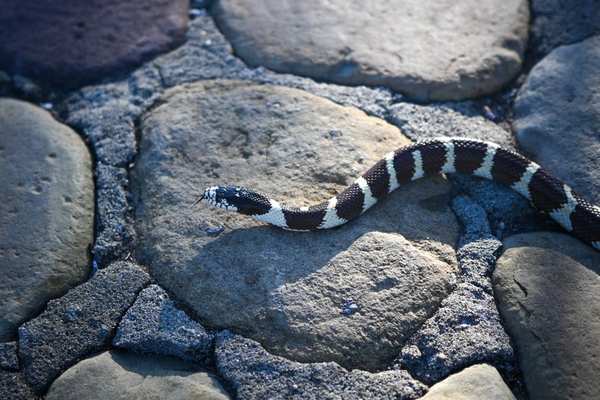
Good kingsnake care begins with a simple idea: give an active snake room to make choices. Kingsnakes are nonvenomous North American constrictors, but species and localities come from different climates. They need secure housing, suitable temperatures, appropriate prey, and places to retreat. Rather than copying a bare tank setup, create a habitat that lets your snake explore, burrow, bask, and hide.
Build a Secure, Spacious Kingsnake Enclosure
Choose the enclosure for the snake’s expected adult length, not its size at the pet shop. A practical starting point for many adults around four feet long is a 48-by-24-by-24-inch enclosure; larger kingsnakes need more space. The snake should be able to stretch out fully along the enclosure’s longest dimension. Youngsters can use spacious housing too, provided they have snug hiding places.
Escape prevention deserves attention. Kingsnakes investigate gaps and squeeze through narrow openings. Fit secure locks, check cable ports, and ensure ventilation panels cannot shift. Keep the habitat away from direct sunlight, radiators, and draughts, which can cause temperature swings.
Arrange Hides and Climbing Features
Place at least one close-fitting hide at the warm end and another at the cool end. Add cork tubes, stable branches, foliage, and a sheltered route between them. Although mostly ground-dwelling, many kingsnakes climb when given opportunities. Secure heavy decorations so burrowing cannot cause a collapse. Never house kingsnakes together: they naturally eat other snakes, making cohabitation risky.
Get Kingsnake Temperature and Lighting Right
Kingsnakes regulate their body temperature by moving between warmer and cooler areas. Position a heat source at one end, aiming for a basking surface around 85–90°F (29–32°C) and a cool zone around 70–78°F (21–26°C). These are starting ranges; requirements vary by species. Measure surfaces with an infrared thermometer and air temperatures with digital probes.
Connect heat sources to appropriate thermostats and protect bulbs from direct contact. A thermometer shows the temperature; a thermostat helps prevent overheating. Check both ends daily, especially after changing room heating. Nights may be cooler, but keep temperatures within your species’ safe range. Where overnight heat is necessary, use a thermostatically controlled source that does not emit light.
Provide a Predictable Day–Night Cycle
Use a timer for roughly 12 hours of daylight followed by darkness, adjusting gradually for seasons. Appropriate low-output UVB can support welfare when installed at the manufacturer’s specified distance, with shaded retreats available. Switch visible lights off overnight. A reptile heating and thermostat guide can help explain the difference between warm air, warm surfaces, and dangerous hot spots.
Choose Kingsnake Substrate for Burrowing and Hygiene
A useful kingsnake substrate permits digging while remaining clean and suited to the animal’s humidity needs. Reptile-safe soil mixes and coconut-based bedding are common choices; aspen can work in drier setups but deteriorates when damp. Avoid cedar or pine shavings, dusty products, and soil containing fertilisers or pesticides. Several inches of bedding allow natural tunnelling. Remove soiled patches promptly.
Humidity often falls around 40–60%, although the ideal range depends on species. Check with a digital hygrometer rather than guessing from condensation. Offer a humid hide containing slightly damp moss, especially during shedding, while keeping the surrounding habitat ventilated. Constantly wet bedding is not healthy humidity.
Provide Fresh Water and Regular Cleaning
Keep a sturdy water bowl large enough for the snake to soak. Replace water daily and whenever contaminated. Remove faeces, urates, and leftover prey promptly. Periodically clean furnishings and surfaces with reptile-safe disinfectant, following its label and allowing everything to dry before the snake returns.
A daily log makes problems easier to detect. Record temperatures, humidity, feeding dates, sheds, and unusual behaviour. For example, if your kingsnake repeatedly stays in its humid hide, inspect humidity readings and check for mites rather than automatically spraying the enclosure. A snake enclosure setup guide can also help when reviewing equipment placement.
Plan Kingsnake Feeding Around Age and Body Condition
Most pet kingsnakes do well on appropriately sized, commercially bred whole prey, commonly mice. Offer frozen-thawed rather than live rodents to reduce injury risk. Thaw prey thoroughly and warm it safely without cooking it. Use feeding tongs and keep fingers away from the strike. Never leave live prey unattended with a snake.
Hatchlings commonly eat every five to seven days, juveniles every seven to ten days, and adults roughly every ten to fourteen days. These are guides rather than deadlines. Choose prey near the snake’s broadest body width and adjust for growth, weight, and condition. An adult gaining excessive weight may need smaller meals or longer intervals. Weigh your pet periodically.
Feed inside the normal enclosure to avoid unnecessary relocation stress. Afterwards, leave the snake undisturbed for at least 48 hours. Wash your hands before reaching into the habitat, especially after handling rodents. Kingsnakes can respond enthusiastically to food scent and mistake a hand for prey.
What if Your Kingsnake Refuses Food?
Check temperature, recent handling, prey size, and whether shedding is approaching. One missed meal is not automatically an emergency in a healthy adult, but repeated refusals, weight loss, breathing changes, or lethargy warrant a reptile veterinarian’s advice. Do not force-feed without professional guidance. Keep records so changes are easy to explain.
Handle Gently and Respect Shedding
Give a newly arrived kingsnake about a week to settle before brief, calm handling sessions. Approach from the side, lift gently, and support the body instead of gripping the head or tail. Stay close to a safe surface. An S-shaped defensive posture, frantic escape attempts, or musking means it is time to stop.
Avoid handling for at least 48 hours after feeding and during shedding. Dull skin, cloudy eyes, and increased hiding often signal an approaching shed. Ensure the humid hide is accessible, then allow privacy. Afterwards, inspect for retained skin around the tail tip and eyes. Never pull stuck skin; ask a reptile veterinarian if it does not resolve safely.
Frequently Asked Questions
Are kingsnakes suitable for first-time snake keepers?
They can be, provided the keeper can supply secure housing, accurate heating, regular feeding, and patient handling. Research the exact species before buying.
How often should I clean a kingsnake enclosure?
Spot-clean whenever waste appears, replace water daily, and carry out thorough cleaning regularly with an appropriate disinfectant. Replace contaminated substrate promptly.
Do kingsnakes need a heat lamp at night?
Not always. Night-time cooling can be safe if the room stays within the species’ recommended range. If extra warmth is needed, use a thermostat-controlled, non-light-emitting heater.
Why does my kingsnake spend so much time hiding?
Hiding is normal after moving home, during shedding, and after feeding. If behaviour changes suddenly, review temperatures, humidity, security, and health before removing retreats.
A Consistent Setup Makes Care Easier
Successful kingsnake care is built on space, secure hides, a measured heat gradient, suitable substrate, clean water, and correctly sized meals. Observe your snake’s behaviour, keep simple records, and adjust conditions for its particular species and body condition. Consistency helps more than endlessly rearranging the enclosure or chasing one perfect temperature number.